How Puzzle Games Help Build Problem-Solving Skills in Children
25 April 2026
Picture this: a five-year-old is hunched over a colorful jigsaw puzzle, tongue slightly sticking out, eyes focused like a laser. One minute they’re frustrated, the next—boom—they find the piece they’ve been hunting for. Cue the mini victory dance.
Is it just cute? Definitely. But it’s more than just adorable—it’s brainpower in action. Puzzle games aren’t just time-fillers; they’re stealthy little teachers in disguise. So, if you’ve ever wondered how puzzle games help build problem-solving skills in children, buckle up. We're about to dive deep—with a quirky twist.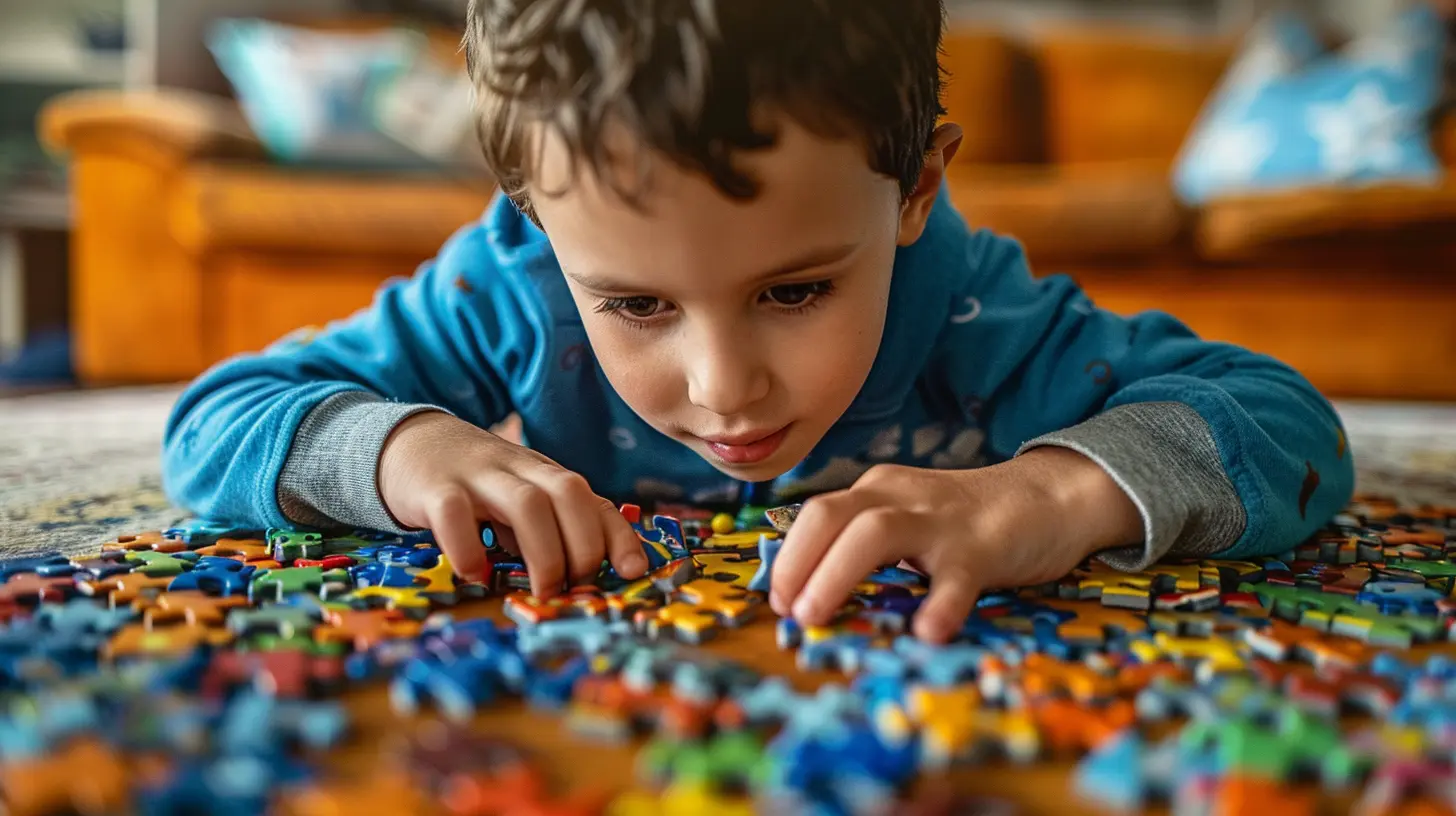
So, What’s the Big Deal With Puzzle Games?
Let’s be honest, puzzles are kind of like broccoli. As kids, we may have resisted them at first, but they’re full of all the mental vitamins growing minds need. From jigsaws and Sudoku to logic games on tablets, puzzles come in all flavors—and each one packs a punch for your child's brain.These games challenge kids to think critically, plan steps, recognize patterns, and adjust strategies. It’s problem-solving wrapped in fun. Kinda like sneaking veggies into spaghetti sauce.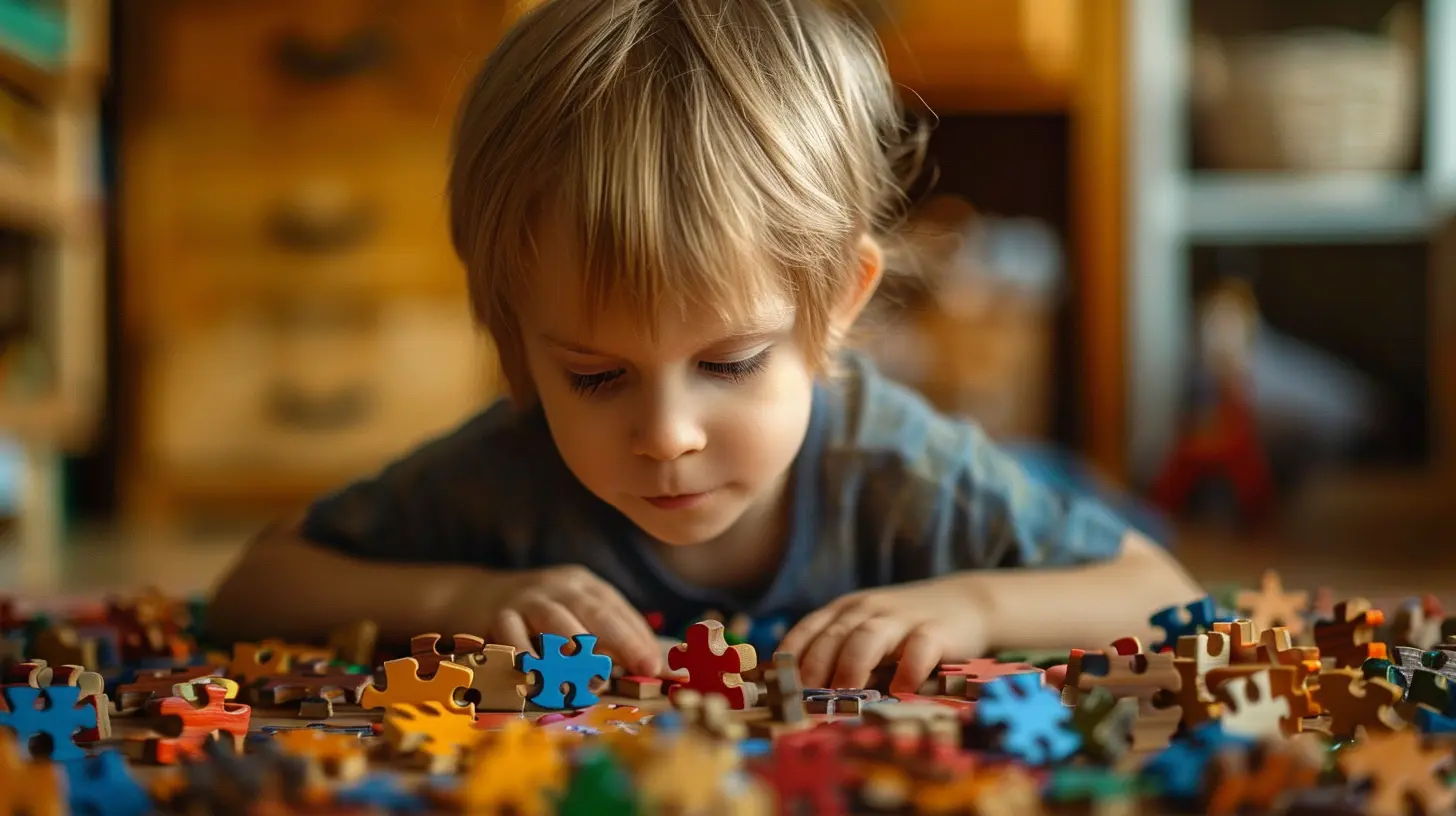
The Secret Sauce: Problem-Solving 101
Before we dive deeper, let’s break down what “problem-solving skills” actually means. It’s not just about solving the grand mysteries of the universe (though, who knows, your kid might get there). It’s about being able to:- Identify an issue
- Analyze possible solutions
- Choose a plan
- Execute it
- Reflect and improve
Guess what? Puzzle games help children do all of that—often without them even realizing it.
Puzzles vs. Problems: The Everyday Connection
Think of a puzzle as a mini version of real-life problems. When a child does puzzles, they’re simulating the same steps they’ll need in real life—for school assignments, making decisions, or even dealing with a tricky social situation.Let’s say your kid is playing a shape-sorting game. They try to jam a square peg into a round hole (classic mistake). What happens next? They pause, re-evaluate, and try a different hole. Boom—problem-solving. Multiply that by hundreds of tiny scenarios in different types of puzzles and voilà! You’ve got a mini-MacGyver in the making.
Types of Puzzle Games That Supercharge Problem-Solving
Not all puzzles are created equal. There’s a buffet of brain-boosters out there, and each type helps children build a different set of cognitive muscles.1. Jigsaw Puzzles: Pattern Recognition & Spatial Awareness
This one’s the OG. Jigsaw puzzles teach kids to visualize the big picture while working on one piece at a time. They begin to notice shapes, colors, and patterns—and how things fit together. That’s spatial reasoning, baby! They’re literally building their brains one piece at a time.2. Logic Puzzles: Deductive Reasoning on Fire
Ever seen a kid obsess over Sudoku or a maze game? These puzzles train the brain to think logically and rule out bad options. It’s like detective training. "Aha! If this piece doesn’t go here, then it must go THERE!" Mental gears grind away in the best possible way.3. Word Puzzles: Language + Logic = Mind Gymnastics
Crosswords, word searches, even scrambles—they all fire up language centers of the brain while reinforcing logical connections. Plus, your kid gets to learn new words without even asking for a dictionary. Win-win.4. Digital Puzzle Games: 21st-Century Thinking Tools
The world’s gone digital, and so have puzzles. From apps that require problem-solving through trial-and-error to story-based games with complex logic, digital puzzles often introduce time limits, interactivity, and instant feedback—all of which train the brain to adapt quickly.Emotional and Social Gains Too? Yup, That’s a Bonus!
Hold up—it’s not just about intellect. Puzzle games sneak in emotional and social growth too.Patience and Perseverance
Let’s face it—puzzles can be frustrating. But learning to stick with it, handle setbacks, and chase that “aha!” moment? That’s grit. And grit isn’t just good—it’s golden.Confidence Boosts
Every solved puzzle is a tiny dopamine rush. It’s like saying to themselves, "Hey, I CAN do this." The more they solve, the more confident they become in facing tougher challenges.Teamwork Makes the Dream Work
Throw in a multiplayer puzzle, and you’ve got collaboration magic. Kids learn to share ideas, divide tasks, and talk it out. That’s teamwork training, right there in your living room.Real Talk: How to Make Puzzle Games Fun (Not Frustrating)
Let’s not sugarcoat it—if a puzzle’s too hard, your kid could end up launching it across the room. (Been there.) So how do you keep the fun alive without throwing in the towel?Start Simple
Keep puzzles appropriately challenging. That means age-appropriate complexity. Start with large pieces and fewer parts, then level up as their skills grow.Celebrate Progress, Not Just Completion
If your child is halfway through, cheer them on! Help them see progress as a win, not just the final piece. It turns the experience into a journey rather than a grind.Mix It Up
Don’t stick with just one type of puzzle. Try different formats to hit different areas of development. Board puzzles one day, digital logic challenges the next. Keep it fresh!The Science Behind the Magic
Let’s sprinkle in a bit of brain science here. Researchers have found that puzzle-solving boosts activity in key brain areas:- Prefrontal Cortex: Decision-making and critical thinking.
- Parietal Lobe: Processing sensory input and spatial orientation.
- Hippocampus: Memory formation.
When your kid is solving a puzzle, it’s basically a mental fireworks show in their brain.
Studies have also shown that early exposure to problem-solving activities like puzzles can correlate with better academic performance over time—especially in math and reading comprehension. In other words, puzzles are the brain food you didn’t know you needed.
Make It a Lifestyle: Everyday Puzzle Ideas
Puzzle games don’t have to live in a box labeled “games.” You can sprinkle them into everyday life.- Cooking: Following a recipe is a step-by-step puzzle.
- Treasure Hunts: Hide clues around the house—it’s logic with a twist.
- Building with Blocks or LEGO: It’s problem-solving in 3D.
The world is basically one big puzzle, and you’ve got a front-row seat to watch your child make sense of it.
Screen Time? Make It Smart Time
Parents, let’s talk screen time. It gets a bad rap, but if your child is playing a well-designed puzzle game, that screen time becomes brain-building time. Look for games with:- Adaptive difficulty
- Logical progression
- Positive reinforcement
- Minimal distractions (we’re side-eyeing you, pop-up ads)
There are tons of educational puzzle apps out there—just keep it balanced.
Final Thoughts: Little Minds, Big Ideas
So, how do puzzle games help build problem-solving skills in children? In more ways than we can count (though your kid probably could if they love number puzzles). Every time they twist a puzzle piece, guess a word, or navigate a labyrinth, they’re learning to think differently, patiently, and creatively.Puzzle games are like secret workouts for the brain. And the best part? Kids don’t even realize they’re learning.
So, next time you see your little one deep into a puzzle, just remember—you’re not looking at a kid playing a game. You’re looking at a future problem-solver, leader, and maybe even the next Einstein-in-sweatpants.
Bonus Section: Quick Puzzle Game Recommendations by Age
Because we care—and know you’re busy—here’s a cheat sheet:- Ages 2–4: Chunky jigsaw puzzles, shape sorters, matching games
- Ages 5–7: Maze books, memory match cards, simple logic puzzle apps
- Ages 8–10: Sudoku, crosswords, LEGO sets with instructions, tangrams
- Ages 11+: Strategy board games, escape room puzzles, advanced game apps
all images in this post were generated using AI tools
Category:
Games For KidsAuthor:

Emery Larsen
Discussion
rate this article
2 comments
Nymira Rhodes
This article brilliantly highlights the cognitive benefits of puzzle games for children's problem-solving skills. By engaging with these interactive challenges, kids enhance critical thinking, perseverance, and creativity. It's fascinating to see how such simple games can contribute significantly to a child's cognitive development and future success. Great read!
April 27, 2026 at 2:57 PM
Emery Larsen
Thank you for your insightful comment! I'm glad you found the article highlights on the cognitive benefits of puzzle games valuable. Engaging in these activities truly does foster critical skills in children.
Rosalie McNeely
Puzzle games are more than mere entertainment; they cultivate critical thinking and resilience in children. By navigating challenges and experimenting with solutions, young minds develop a framework for tackling real-world problems, fostering creativity and adaptability that extend beyond the gaming screen.
April 25, 2026 at 4:43 AM
Emery Larsen
Thank you for your insightful comment! I completely agree that puzzle games play a vital role in developing critical thinking and resilience in children, equipping them with essential skills for real-world challenges.