How Sci-Fi Games Incorporate Real Science
14 May 2026
Science fiction games have always had this magical way of pulling us into mind-bending universes filled with alien worlds, sleek starships, and futuristic tech. But here’s the thing — it’s not all just fantasy. Underneath the laser beams and wormholes, many of these games are actually grounded in real, hard science.
Yup, you read that right. Some of our favorite sci-fi games lean heavily on actual scientific theories, physics, biology, and even astronomy to build believable and immersive worlds. So, let’s take a journey through the cosmos and dig deep into how sci-fi games incorporate real science — and why that makes them insanely cool.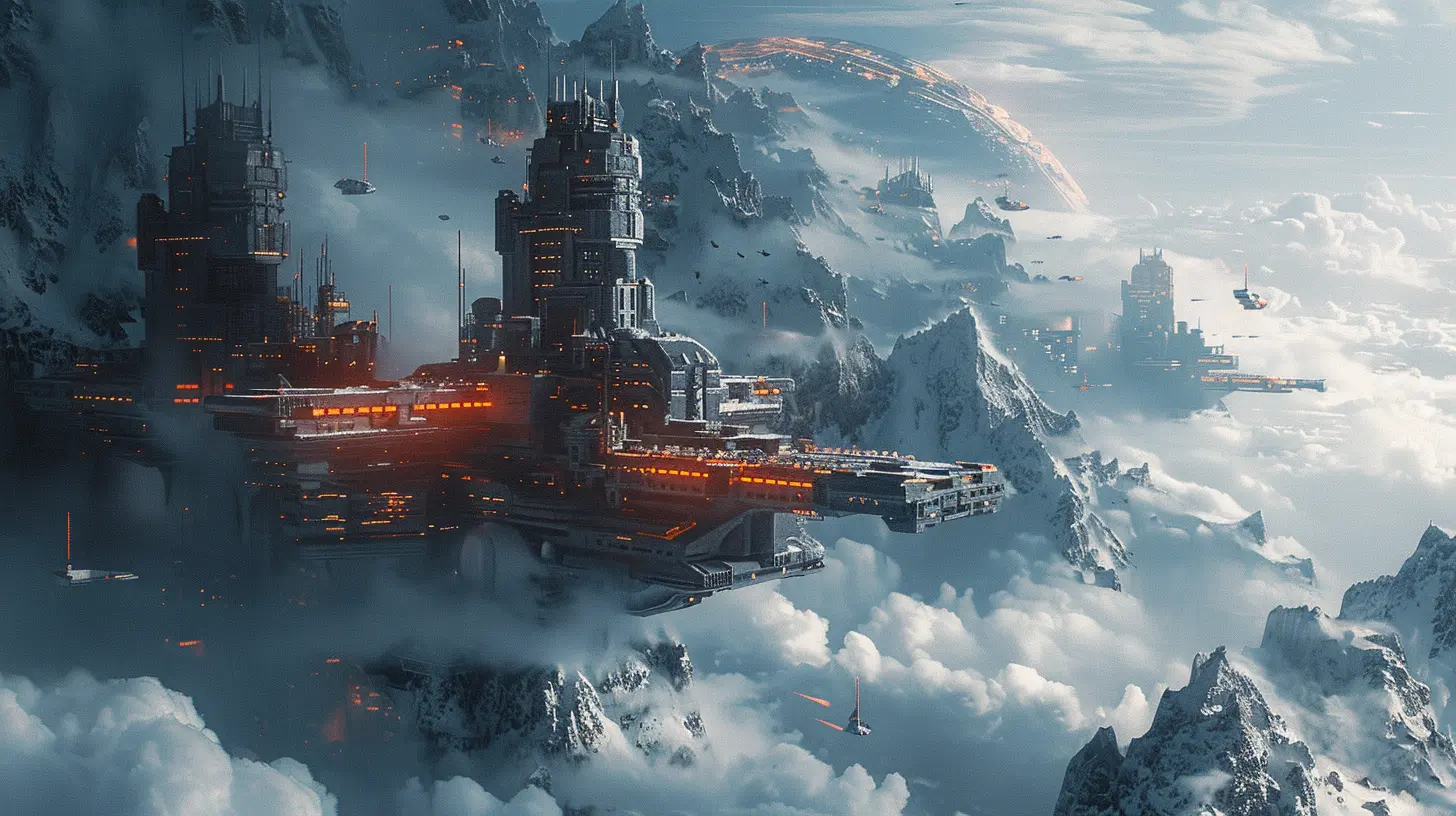
Why Science in Sci-Fi Games Matters
Before we warp straight into hyperspace, let’s step back a little. You might be wondering, “Why should a video game care about real science?” Well, here's why:1. Immersion – When things make scientific sense (even loosely), your brain buys into the game world more easily.
2. Education – Players often come away having learned something — maybe even without realizing it.
3. Better Storytelling – Scientific consistency adds depth, making the universe feel alive and logical.
4. Inspiration – Real-world scientists and engineers have been inspired by sci-fi since day one (just ask Elon Musk).
In short, science makes sci-fi games smarter, more engaging, and… well, cooler.
Using Real Physics in Gameplay
Now let’s talk physics. No, not the “falling apple” classroom stuff — we’re diving into Newtonian mechanics, relativity, and space-time warping. Some games go the extra mile to weave in actual physical laws, and it totally changes how we play.Example: Kerbal Space Program
This gem is a physics-fan’s dream come true. In Kerbal Space Program, you’re tasked with building rockets and getting your little green astronauts to space. Sounds simple? Think again.The game uses:
- Real orbital mechanics
- Thrust-to-weight ratios
- Delta-v (change in velocity)
- Gravitational pulls from planets
It’s literally rocket science. And it’s fun. You learn by trial-and-error that slingshotting around the moon to save fuel isn’t just a movie trick — it’s real orbital strategy.
Newton’s Laws in Action
Ever played a space game and noticed your ship keeps drifting after you stop the engine? That’s Newton’s First Law — objects in motion stay in motion. Titles like Elite Dangerous and Children of a Dead Earth use inertia and momentum to dictate spaceship movement. It’s not your usual “press forward to go” kind of control scheme — it’s more like flying a real spacecraft with all its quirks and drift.
Time Dilation and Relativity – Warping Our Minds
Alright, buckle up. We’re going Einstein here. Time dilation in games is often portrayed as a cool side effect of near-light-speed travel (and it is), but some games actually bake it into their mechanics.Event[0] and Relativity
In Event[0], while light-speed travel is more of a backdrop detail, it explores the psychological and narrative impacts of space travel — like isolation and the passage of time. The idea of time bending the faster you go isn't just science-y mumbo jumbo — it’s the reality proposed by Einstein's theory of relativity. Some games mention this, others try to simulate how time would pass differently for characters based on their speed or proximity to gravity wells.Imagine playing a co-op game where one player has been gone for hours, while for you, only minutes passed. Trippy, right? That’s relativity in action.
Astrobiology and Alien Ecosystems
Aliens are a sci-fi game staple. We love ‘em. But the best games don’t just slap tentacles on a creature and call it a day. They create entire biospheres, taking cues from real-life biology and astrobiology.Mass Effect’s Deep Universe
Mass Effect stands out for its detailed alien species — from the amphibious hanar to the militaristic krogan. Each species has its own evolutionary path, shaped by their planet’s environment, gravity, and climate. It’s like Darwinian evolution in hyperdrive.The developers consulted biologists and scientists to ask questions like:
- How would a creature evolve on a high-gravity planet?
- What senses might evolve in a species living in darkness?
It results in a world that feels biologically plausible. Suddenly, meeting aliens becomes more than just odd faces — it’s an encounter with believable life.
Stellar Cartography and Real Space Mapping
Ever looked up at the night sky and felt tiny? Well, some game devs use real astronomical data to map out their game worlds. That means you could visit actual star systems, galaxies, and exoplanets — virtually, of course.Elite Dangerous and No Man’s Sky
Elite Dangerous is notorious (in a good way) for mapping the Milky Way using real star catalogues. Over 400 billion star systems — many of them reflecting real NASA data. You can actually find Earth, Sol, and other known celestial bodies.No Man’s Sky, while more procedurally generated, also leans on astronomical realism — especially in its use of planetary orbits, timezones, and star classifications.
The idea? If you’re gonna explore the stars, why not make them resemble the ones in our actual sky?
Engineering and Real-World Technology
Ever disassembled a futuristic weapon in a game and thought, “Wow, this could actually work”? There’s a reason for that — developers often base in-game tech on real-world prototypes or emerging science.Deus Ex and Cyberpunk
These games dive deep into cybernetics, AI, biotech, and transhumanism. Neural implants, augmented limbs, bio-hacking — these aren’t just sci-fi fantasies. They’re inspired by current research in neuroscience, robotics, and genetic engineering.Deus Ex goes so far as to include actual ethical dilemmas related to human enhancement. It gets you thinking: If science lets us upgrade our bodies, should we?
AI and Machine Learning in Sci-Fi Games
Artificial Intelligence is a hot topic in both video games and real life. Many games explore the boundary between tool and entity — portraying AI as both helper and threat.The Talos Principle and Soma
In The Talos Principle, you’re a sentient machine solving puzzles in a simulated world. In SOMA, the line between human consciousness and AI is disturbingly blurred.These games pose deep questions:
- Can an AI be conscious?
- Is identity tied to our bodies?
- What really defines “life”?
And what’s wild is… real AI researchers are asking the same things.
Scientific Advisers and Consultants: The Secret Sauce
Many top-tier games bring in scientists during development to make things more accurate. For example:- NASA consultants for Kerbal Space Program
- Astrophysicists for Elite Dangerous
- Biologists for Mass Effect
They provide crucial input on space travel, biology, planetary geology — heck, even linguistics for alien languages. It’s how game worlds end up feeling cohesive and smart, even when packed with fiction.
Real Science Makes Sci-Fi Games More Believable
At the end of the day, players can tell when a sci-fi world has been built on thoughtful foundations versus one that’s all glitter and no guts. Real science gives structure to the fantasy — like the steel skeleton under a rollercoaster. It makes the impossible feel possible and the imaginary feel tangible.Sure, not every sci-fi game is meant to be a physics simulator. And that’s okay. But when developers fold in real scientific concepts — whether subtly or front-and-center — they add layers that players might not fully notice at first but definitely feel.
The Future of Science in Sci-Fi Gaming
As technology keeps blazing ahead, games will only get better at simulating reality. With better AI, more accurate physics engines, and tools for procedural generation, we’re looking at sci-fi games that could one day mirror the depth of real scientific research.Imagine games that teach you quantum physics through puzzles. Or a game that syncs with real-time space telescope data so you can explore galaxies as they're discovered.
We’re at the edge of something huge — and real science is paving the path.
Final Thoughts
Sci-fi games aren’t just about pew-pew lasers and epic space battles (though we love those too). They're a celebration of human imagination wrapped around serious scientific thought. Whether it’s the realism of orbital mechanics, the believability of alien life, or the ethical debates around AI, real science is often working quietly behind the scenes, making the gameplay richer and the stories more impactful.So next time you're out there jumping through wormholes or trading with aliens on a distant moon, take a moment to appreciate the science that made it all possible.
Who knew learning could be so... out of this world?
all images in this post were generated using AI tools
Category:
Sci Fi GamesAuthor:

Emery Larsen
Discussion
rate this article
2 comments
Otto Luna
Sci-fi games often blend imagination with real science, creating engaging experiences.
June 28, 2026 at 2:57 AM
Emery Larsen
Absolutely, the fusion of real science with imaginative storytelling fuels unique gameplay and sparks curiosity about the universe.
Vienna Mendoza
Great article! Who knew my late-night gaming habit was actually a science lesson? Next time I'm blasting aliens, I'll tell myself I'm just a space researcher... with really bad aim.
May 17, 2026 at 5:10 AM
Emery Larsen
Thanks for the kind words! Glad you found the connection between gaming and science interesting. Happy space researching... and good luck with those aliens!