How Sci-Fi Games Predict Technological Advancements
29 May 2026
Have you ever played a sci-fi game and thought, “Man, wouldn’t it be wild if this was real?” Turns out, that’s not as far-fetched as you might think. Science fiction games have a crazy knack for imagining the future in ways that hit way closer to home than most of us expect.
From space travel to AI assistants, sci-fi games don't just entertain us—they often serve as futuristic blueprints, hinting at what’s coming down the tech pipeline. Let’s dig into how sci-fi games somehow turn fiction into reality, and why game developers might just be the unsung futurists of our time.
The Sci-Fi Game Scene: A Digital Crystal Ball
We’re not just talking about cool ray guns and warp drives. Sci-fi games build entire ecosystems—tech, tools, civilizations—that mirror real-life innovation years, even decades, ahead of time.Think of these games like crystal balls, only a lot more fun and interactive. Developers, artists, and writers take scientific theories, blend them with imagination, and unintentionally—or sometimes intentionally—predict the future.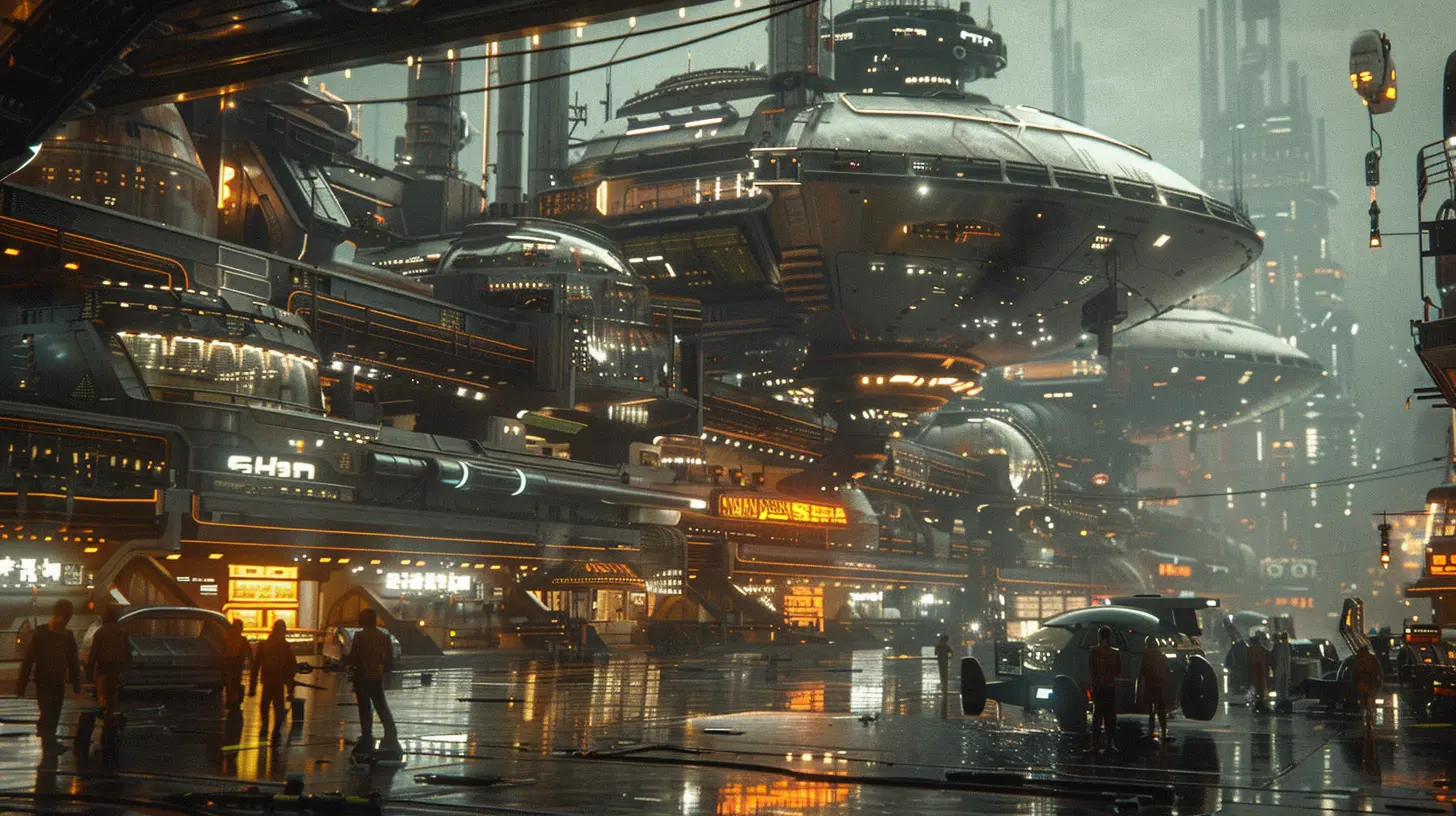
Real Tech That Sci-Fi Games Dreamt Up First
Let’s take a walk down memory lane with some classic and modern sci-fi games that imagined technologies before they became reality.1. Deus Ex (2000): Augmented Reality and Cybernetics
This game was way ahead of its time. In the world of Deus Ex, humans use cybernetic enhancements to become superhuman. Sound familiar? Fast forward to now, and you’ve got Elon Musk’s Neuralink and actual bionic limbs that can respond to brain signals.Also, Deus Ex explored surveillance states and hacking—topics that feel incredibly relevant in today’s internet-driven world. In other words, the game warned us before Big Tech became, well, BIG tech.
2. Mass Effect Series: AI and Space Colonization
Mass Effect doesn’t just give you epic space battles. This franchise dives deep into artificial intelligence, interstellar travel, and ethical questions around synthetic life. It doesn’t seem so far out anymore, does it?NASA is actively working on Mars colonization plans. Meanwhile, companies like OpenAI are pushing AI capabilities that echo the interactions between humans and synthetic beings in Mass Effect.
3. Portal (2007): Quantum Physics and AI Personalities
Now here's a game that wraps mind-bending science in deadly puzzles. Portal introduced us to GLaDOS, an AI with sass and a hidden agenda. Today, we’ve got AI assistants with personalities (some better than others) and labs actually studying quantum teleportation.While we’re not quite flinging ourselves through portals yet, the core physics concepts in the game are very real and under constant research.
How Game Developers "Predict" the Future
Alright, so here’s the real question—how do game developers actually pull this off? Are they just lucky, or is there more to it?1. Research, Baby!
Game devs don’t just throw random high-tech gear into a game. They dig into science papers, talk to futurists, and even collaborate with real scientists. Games like Elite Dangerous and Destiny have consulted astronomers to help design their star maps and space travel mechanics.They’re not guessing—they’re dreaming bigger using real science as a launching pad.
2. Pure Imagination Meets "What If?"
Let’s not underestimate the power of imagination. Sometimes, just asking “What if?” opens the door to future inventions.What if people could teleport? What if we lived with AI partners? What if entire cities floated in the sky? Games take these what-ifs and create fully fleshed-out environments, which sometimes inspire real-world researchers to explore similar possibilities.
3. Inspired Creators Become Actual Innovators
Ever heard of a gamer who became an engineer or an aerospace scientist? Happens more than you’d expect.Growing up around imaginative, tech-forward games often sparks curiosity and inspiration. That curiosity turns into education, and before you know it, someone’s designing a drone or developing VR tech because they once played Halo or No Man’s Sky.
The Feedback Loop: Art Inspires Reality, Reality Inspires Art
It’s not a one-way street. Real-world science influences games, but games also inspire innovation. It’s this fascinating feedback loop.Take VR, for example. The concept was sci-fi gold for decades. Then came games like Half-Life: Alyx and VRChat that basically said, “You wanted virtual reality? Here it is—now go explore!”
Suddenly, VR hardware developers had something to model around, and the tech moved from niche to mainstream faster than anyone expected.
Sci-Fi Games and Social Tech Predictions
It’s not just gadgets and gizmos—sci-fi games often predict how society will react to technology too.1. Surveillance and Data Privacy
Games like Watch Dogs and Detroit: Become Human offer a chilling look at a surveillance-heavy future. Creepy? Sure. But also weirdly accurate.We’re living in a world where our phones track our every move, facial recognition is common, and data is the new currency. These games didn’t just see it coming—they put a big fat spotlight on it.
2. Digital Economies and Cryptocurrencies
Remember when World of Warcraft gold farming was just a side hustle? Now, we’ve got actual digital economies using blockchain tech.Games like EVE Online simulate complex economies that are eerily similar to real-world stock markets. And with the rise of NFTs and metaverse platforms, the line between digital and real money keeps blurring.
Predicting Future Game-Tech Trends
So, what kinds of tech might sci-fi games be predicting right now?Here are a few guesses based on recent trends:
- Brain-computer interaction: Imagine controlling a game with just your thoughts. Some sci-fi titles already toy with this, and it's closer than you think.
- Conscious AI: Games like SOMA and The Talos Principle question what it means to be truly sentient. Future tech could bring these questions to real-life ethics boards.
- Fully immersive metaverses: We’re inching closer with VR and AR. Sci-fi MMOs may eventually become full-blown metaverse experiences with persistent worlds and real economies.
- Genetic engineering and biohacking: Titles like BioShock and Cyberpunk 2077 explore the dark and shiny side of bio enhancement. CRISPR and genetic therapy are making these ideas less fantasy and more possibility.
Why Should Gamers (Yes, You!) Care?
Here’s the cool part: you’re not just playing around. If you’re into sci-fi games, you’re getting a sneak peek at what life might look like in 10, 20, or 50 years.You’re essentially beta-testing future technology in your living room. Whether it’s navigating AI relationships, bridging digital and physical realities, or questioning what consciousness really is—sci-fi games put you right in the front seat of the future bus.
Final Thoughts: Games Aren’t Just ESCapism
Sure, firing up a sci-fi game after a tough day is a solid form of escape. But while you're dodging plasma bolts or steering your spaceship, you're also engaging in a sandbox of future possibilities.Sci-fi games aren't just fiction—they're previews. They take real science, stretch it with imagination, and hand us a controller to explore what could be. Whether it's AI, cybernetics, quantum tech, or interstellar travel, these games play a surprisingly big role in shaping what technology looks like tomorrow.
So, the next time someone tells you gaming is a waste of time, just smile and tell them you're training for the future.
all images in this post were generated using AI tools
Category:
Sci Fi GamesAuthor:

Emery Larsen
Discussion
rate this article
2 comments
Poppy McNaughton
Great read! It's fascinating how sci-fi games inspire real-world tech. They often lead our imaginations to new possibilities and innovations for the future.
July 9, 2026 at 3:51 PM
Leo Allen
Sci-fi games inspire real-world innovations, showing how imagination fuels technological progress in our lives.
June 5, 2026 at 3:47 AM
Emery Larsen
Absolutely! Sci-fi games not only spark creativity but also pave the way for actual innovations. The connection between imagination in gaming and real-world tech is truly fascinating.