Post-Apocalyptic Sci-Fi Games and Their Moral Dilemmas
18 March 2026
Ever played a game where every decision you make feels like it could make or break what's left of the world? That’s the thrill of post-apocalyptic sci-fi games. These games don't just throw you into a wasteland full of mutants and rubble—they challenge your ethics, push your emotional limits, and force you to question what's right and what's necessary for survival.
In this article, we’re diving deep into the murky waters of moral dilemmas in post-apocalyptic sci-fi games. We're not just talking about shooting mutants or scavenging supplies. No, we're talking about the gut-wrenching choices, the consequences that ripple through what's left of civilization, and the way these games mess with your sense of right and wrong.
So, gear up, grab your Pip-Boy, and let’s explore the philosophical minefield that is the post-apocalyptic gaming genre.
What Makes Post-Apocalyptic Games So Morally Complex?
Okay, picture this: The world as we know it is gone. Cities are dust, governments are memories, and survival is your only objective. But suddenly, you're faced with a choice—help a starving family knowing it'll drain your own resources, or walk away and focus on your own crew?That’s the kind of scenario post-apocalyptic sci-fi games throw at you.
These games strip us down to our raw, primal instincts. With no law, no order, and sometimes no humanity left, they ask us: who do you become when there are no rules?
A Sandbox of Chaos
In many ways, these scenarios serve as a sandbox for testing human morality under duress. When society collapses, so does the rulebook. You're no longer a player simply following instructions; you're the author of your own story. And the choices you make? They often have serious consequences.
Fallout Series: Where Karma Isn’t Always Clear
Chances are, if you’ve dabbled in post-apocalyptic gaming, you’ve played a Fallout title. Whether it’s Fallout 3, New Vegas, or Fallout 4, this franchise has become an icon in the genre.The Gray Zone of Decision Making
One of the most iconic moral dilemmas in Fallout 3 comes early on—you can choose to detonate a nuclear bomb and destroy an entire town for some caps and a luxury suite. Or, you can disarm it and save everyone. Sounds simple, right? Good vs. evil?Not quite.
The game subtly plays with your sense of justification. What if the town was full of corrupt people? What if the luxury suite could help you survive longer and do more good down the line? Fallout consistently puts you in morally gray zones, where every decision has a cost—and a consequence.
Companions With Consciences
What’s worse than making a difficult choice? Having someone watch you do it.Fallout's companions often react to your decisions, judging you silently—or openly. It’s like having your moral compass externalized, giving weight to every choice you make.
The Last of Us Series: Survival at the Expense of Humanity
If there’s a game that redefined the meaning of post-apocalyptic storytelling, it’s The Last of Us and its sequel. Set in a world ravaged by a fungal outbreak, the humanity that remains is arguably more dangerous than the infected.The Personal Cost of Choices
The Last of Us isn’t concerned with typical RPG-style choice mechanics. Instead, it’s about emotional storytelling and the consequences of your actions—whether you agree with them or not.Take the ending of the first game. Joel chooses to save Ellie, a young girl who might be the key to curing the plague, at the cost of potentially dooming humanity. Was he right? Was it selfish? It’s a moral conundrum that still sparks debate.
No Clear Heroes
What makes these games shine is their refusal to designate clear-cut heroes or villains. Everyone’s doing what they think is right. And in a destroyed world, who's to say what's right anyway?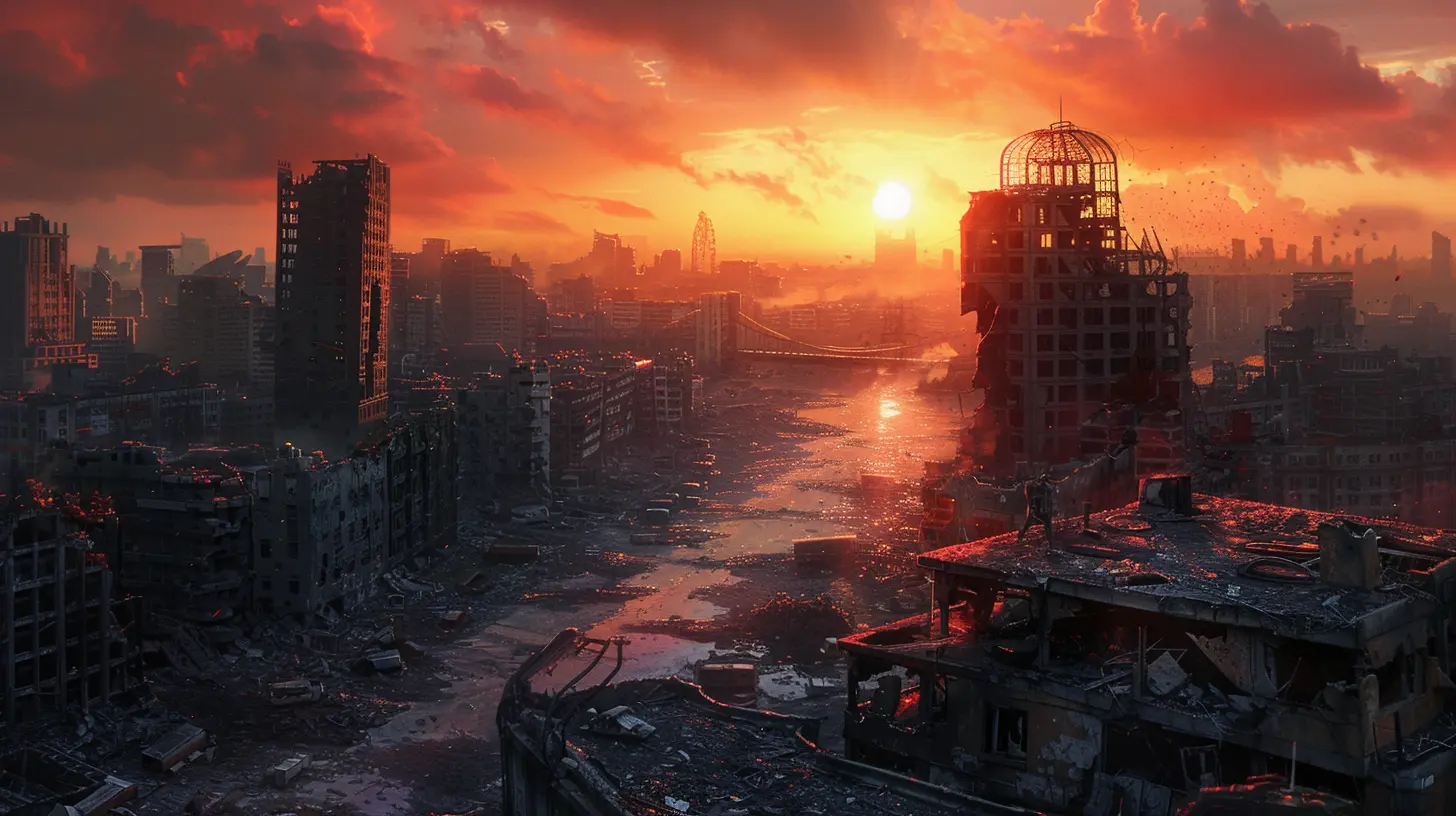
Metro Series: Choice in the Shadows
Based on Dmitry Glukhovsky’s novels, the Metro series offers a gritty, claustrophobic take on post-apocalyptic survival. Set in underground subway tunnels beneath a nuclear-ravaged Moscow, these games force players to survive not just physically, but ethically.Morality Without a Meter
Unlike Fallout’s karma system, Metro’s moral system is invisible. You don’t see it, but the game watches you. Save a prisoner? You get invisible karma points. Kill too often or act selfishly? You lose them. And it’s all building toward unique endings.You don't get gold stars for being good—just peace of mind. Or maybe not.
Ethical Scarcity
Metro is brutal. Resources are scarce, and you’re often forced to choose between helping someone or keeping enough bullets to survive your next encounter. The line between sacrifice and foolishness gets really blurry.Wasteland Series: Old School Dilemmas, New Age Questions
Wasteland may not have the cinematic flare of The Last of Us or the mainstream pull of Fallout, but it’s a powerhouse when it comes to ethical decision-making in post-apocalyptic settings.Every Action Has a Reaction
This series thrives on cause and effect. A decision you make in the beginning of the game—like killing or sparing a certain group—can come back to haunt you hours later. It’s like the butterfly effect on steroids.And we're not talking minor dialog changes. We're talking full-on town destructions, massive battles, and the survival (or extinction) of entire factions.
The Price of Leadership
As the leader of a ranger squad, your moral compass affects more than just you. Every choice shapes the world around you and affects how your team views your leadership. Make too many heartless decisions, and even your closest allies may turn against you.Bioshock and Bioshock Infinite: Philosophy Meets Apocalypse
Okay, okay, maybe the Bioshock games aren’t “post-apocalyptic” in the traditional desert-wasteland sense. But make no mistake—they’re just as morally rich and dystopian as any Mad Max-style landscape.The Ethics of Control
In the original Bioshock, you’re presented with one of the biggest moral gut-punches in gaming history: the "Would You Kindly…" reveal. It's a masterclass in showing the illusion of choice, questioning whether we truly control our actions—or if we just think we do.Little Sisters: To Harvest or Not?
Another memorable dilemma is whether to harvest or save the Little Sisters. Harvesting gives you immediate power, but saving them has long-term benefits and feels more ethically sound. Once again, there's no "right" answer—just the one you can live with.Moral Systems vs. Player Psychology: Why We Care So Much
Let’s zoom out for a second. Why do these choices hit us so hard? After all, we're just pushing buttons on a controller, right?Well, post-apocalyptic games tap into something deeper. When survival is on the line, our brains react differently. These are decisions we never expect to face in real life, but they help us explore who we might become if we had to.
Games As Morality Simulators
Some games slap on a good vs. evil meter and call it a day. But the best ones? They don't tell you that you're being watched. They just let you act—and live with the aftermath.You might feel justified in stealing food from a dying man if it means your faction survives. But days later, when you hear his daughter died because he couldn’t feed her? That’s a moment that sticks.
That’s the power of well-crafted moral dilemmas—they linger.
Why We Keep Coming Back to These Games
Despite how mentally and emotionally taxing these games can be, we love them. Weird, right?But here's the thing: they allow us to wrestle with questions we can't ask in real life. They strip us of comfort, expose our priorities, and make us walk the line between hero and villain—often without us realizing when we’ve crossed it.
In a way, they’re not just games—they’re ethical playgrounds.
They Make Us Think
Not a lot of entertainment mediums can force you to sit back and really chew over your own sense of morality. But these games do it effortlessly, hiding huge philosophical bombshells beneath dusty ruins and mutant-infested forests.And maybe, just maybe, they help us understand ourselves a little better.
Final Thoughts: Would You Survive… With Your Morals Intact?
Post-apocalyptic sci-fi games are more than just end-of-the-world fantasies. They're deep, nuanced, and often uncomfortable explorations of human nature. They make you ask, "What would I do?"—and then let you find out.Not every decision will be easy. Some will haunt you. Others will redefine what you thought you knew about right and wrong.
But that’s what makes these stories so powerful.
Because when the world ends, the hardest part isn’t surviving—it’s staying human.
all images in this post were generated using AI tools
Category:
Sci Fi GamesAuthor:

Emery Larsen
Discussion
rate this article
2 comments
Hadley Alexander
Ah, nothing screams 'fun' like deciding whether to save a dystopian world or let it burn while you munch on virtual popcorn. Who knew moral dilemmas could be so entertaining? Bring on the chaos!
March 27, 2026 at 4:25 AM
Emery Larsen
Glad you found the chaos entertaining! Dystopian worlds really do put our moral choices to the test. 🍿
Lilith Hubbard
This article effectively highlights how post-apocalyptic sci-fi games uniquely challenge players to navigate complex moral landscapes, reflecting humanity's deepest fears and ethical quandaries in a fractured world.
March 20, 2026 at 5:38 AM
Emery Larsen
I'm glad you found the article insightful. Post-apocalyptic settings do offer rich ground for exploring those moral challenges.