Time Travel Mechanics in Sci-Fi Games Explained
21 January 2026
Ever wanted to hop in a time machine, fix your past mistakes, or peek into the future? Yeah, same here. That’s probably why time travel is such a fascinating mechanic in sci-fi video games. It's not just cool—it's also a clever way to bend rules, tell amazing stories, and create mind-bending puzzles. But have you ever wondered how developers actually pull it off without breaking the game entirely?
Let’s dive headfirst into the wormhole and break down exactly how time travel works in sci-fi games, the types of mechanics used, and why it's one of the most mind-blowing features in gaming today.
What Makes Time Travel So Appealing in Games?
First things first—why are we so obsessed with time travel in games?Well, picture this: you're stuck in a tough boss fight, and just as you're about to deliver the final blow, you mess up. In a regular game, that’s a Game Over. But in a time-travel game? You rewind time, dodge the hit, and boom—victory!
Time travel gives players a kind of god-like power. It lets us control fate, rewrite our mistakes, and experience stories from alternate perspectives. And let’s be honest—it’s just fun watching cause and effect unravel in real-time.
Types of Time Travel Mechanics in Sci-Fi Games
Time travel isn’t a one-size-fits-all concept. Different games approach it in different ways. Let’s break down the most common types:1. Rewind Mechanics
Think of this like hitting the "undo" button on life. These mechanics let you reverse time and fix small mistakes.Examples:
- Prince of Persia: Sands of Time
- Braid
- Forza Horizon (Rewind Feature)
This mechanic gives players room to experiment without harsh penalties. You screw up, rewind a few seconds, and try again. It's perfect for platformers and racing games where timing is everything.
2. Branching Timelines and Alternate Realities
These mechanics create a multiverse of choices. Every decision you make spawns a different timeline, each with its own consequences.Examples:
- Life is Strange
- Chrono Trigger
- Detroit: Become Human
This type of time travel focuses more on storytelling than gameplay mechanics. Your choices matter—not just for the ending, but for how the world develops around you.
3. Loop-Based Mechanics
Time loops trap you in a repeating cycle, usually forcing you to learn something new each loop to make progress.Examples:
- Returnal
- Outer Wilds
- The Legend of Zelda: Majora's Mask
These games are like Groundhog Day, but with more aliens, puzzles, and explosions. The fun part? Each loop gives you new knowledge, tools, or powers to inch toward a solution.
4. Future-Past Interaction
This mechanic lets players bounce between different time periods, often changing the past to affect the future.Examples:
- Titanfall 2 (Effect and Cause mission)
- Day of the Tentacle
- The Silent Age
These games are puzzle-heavy and rely on cause-effect logic. You plant a seed in the past, and it grows into a tree you can climb in the future. Simple concept, but insanely satisfying when done right.
5. Parallel Self Interaction
Ever wanted to work with a past or future version of yourself? These mechanics allow for just that.Examples:
- The Misadventures of P.B. Winterbottom
- The Gardens Between
- Ratchet & Clank: A Crack in Time
These mechanics throw you into puzzles where you record your actions and then work alongside a temporal copy of yourself. It's like co-op... with yourself.
The Challenges of Implementing Time Travel in Games
Time travel sounds awesome on paper, but man, it’s a nightmare to code. Here are a few reasons why:1. Causality is a Beast
If players can change the past, developers need to account for all possible outcomes. That means building a logic system that tracks every action and its ripple effect. One tiny oversight, and—bam!—the game breaks, or worse, the story stops making sense.2. Data Management and Memory Load
Rewinding time or jumping between periods means storing a ton of state data. What was happening five minutes ago? What enemy was alive? What object was moved? That’s a lot of info for your console or PC to remember.3. Narrative Coherence
Time travel stories can get real messy, real fast. Keeping the plot understandable while still being complex is a serious tightrope walk. Games like Chrono Cross or Zero Escape pull this off, but it’s not easy.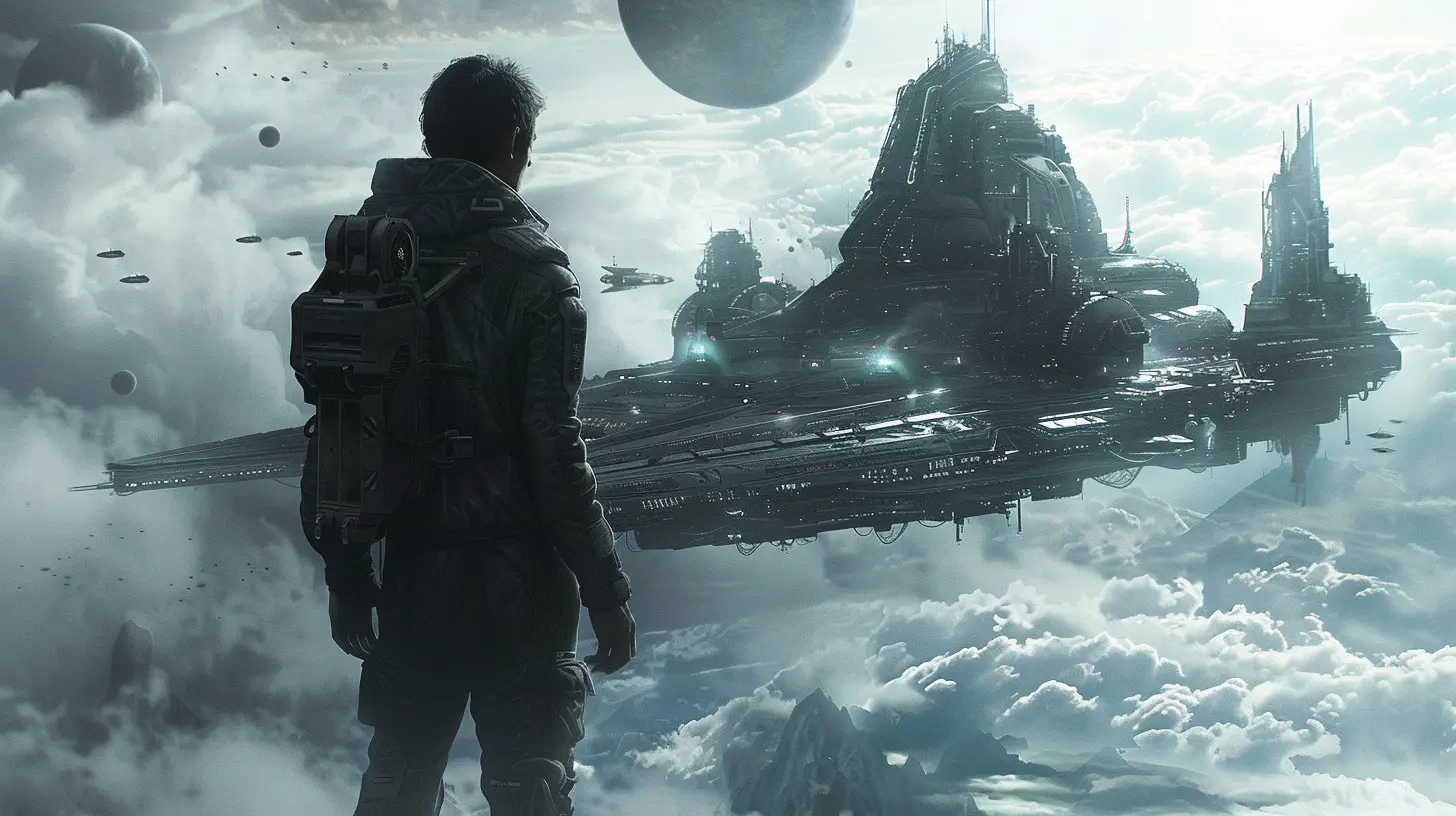
Legendary Games That Nailed Time Travel
Let’s take a moment to appreciate some games that absolutely crushed it with their time travel mechanics.Chrono Trigger (1995)
Arguably the godfather of time-travel RPGs. Developed by Square, this game took you through past, present, and future timelines. Your actions in one era affected the others, creating a domino effect across the game’s multiple endings.The Legend of Zelda: Majora's Mask
A time loop hellscape with a ticking doomsday clock. Every 3-day cycle reset required you to plan and execute tasks with surgical precision. It was tense, immersive, and way ahead of its time.Braid
On the surface, a simple puzzle-platformer. But underneath? A heartbreaking story and mind-bending time mechanics that made you rethink every move. It’s not just a game—it’s a brain workout with emotional depth.Life is Strange
This episodic adventure let you rewind time and change the flow of conversations, events, and fate. It wasn’t about puzzles—it was about people. The butterfly effect in this game hits hard, especially when choices come back to haunt you.Titanfall 2 - "Effect and Cause"
This single mission is often praised as one of the best in any first-person shooter. You flip between past and present inside a collapsing facility. It’s smooth, unexpected, and jaw-droppingly cool.Why Time Travel Makes Games More Replayable
One of the best things about time travel mechanics is replayability. Why play once when you can experience alternate endings, side quests, and bonus content in different timelines?Games like Until Dawn or Steins;Gate practically beg you to replay and see what happens if you just did one thing differently. It’s like getting a second (and third, and fourth) shot at the same adventure.
The Real Science Behind the Fiction
Okay, let’s nerd out for a second.Game developers often borrow from real physics theories to justify their mechanics. Einstein’s theory of relativity, wormholes, and quantum mechanics all play a role in how time travel is conceptualized.
Of course, most games don’t stick to the science. They use it as a launching pad to create fantastic settings and logical (but flexible) rules. Think of it as “science-inspired fiction” rather than hard science.
How Indie Games Are Innovating Time Travel
Indie devs are killing it with experimental time mechanics. Why? Because they’re not afraid to break conventions.Outer Wilds
Let’s talk about that 22-minute loop. It’s not just a timer—it’s a gameplay mechanic, a narrative device, and a symbol of existential dread all rolled into one. Each loop reveals more clues, making you feel like a time detective in space.The Forgotten City
Originally a Skyrim mod, this game dropped you into a Roman city stuck in a time loop. Break the “Golden Rule,” and the day resets. It’s more than just solving a mystery—you’re rewriting a tragedy.Tips for Players: Mastering Time Travel in Games
Let’s get practical. Want to be a time-travel pro? Here are a few player-friendly tips:- Pay Attention: Clues are often hidden in past events.
- Experiment Freely: You can always rewind. Don’t fear failure.
- Track Changes: Whether it’s a quest log or a journal, note what you changed and when.
- Think in Layers: Time-travel games are rarely linear: time to embrace the chaos.
The Future of Time Travel in Gaming
As tech evolves, we’re bound to see even more complex time mechanics. Imagine VR games where you manipulate time with gestures or AI-powered narratives that adapt in real-time based on how you alter timelines.Time travel isn’t just a gimmick—it’s a doorway to storytelling innovation. And we’ve only just started scratching the surface.
Final Thoughts
Time travel in sci-fi games isn’t just about flashy effects or cool plot twists. It’s about giving players the power to shape the world, rewrite their story, and question the very concept of reality. Whether you're saving a doomed planet, solving a cosmic mystery, or just fixing a jump gone wrong, time travel makes games deeper, richer, and wildly unpredictable.So next time you see a glowing portal or a ticking clock, get excited. Because you're not just starting a game—you’re bending time itself.
all images in this post were generated using AI tools
Category:
Sci Fi GamesAuthor:

Emery Larsen
Discussion
rate this article
2 comments
Nadia McVaney
Intriguing insights on time travel!
January 25, 2026 at 4:23 AM
Emery Larsen
Thank you! I'm glad you found the insights interesting!
Ivy McCarty
Time travel mechanics enhance storytelling and gameplay depth immensely.
January 23, 2026 at 4:13 PM
Emery Larsen
Absolutely! Time travel adds layers of complexity and intrigue, allowing for unique narrative twists and gameplay experiences that keep players engaged.